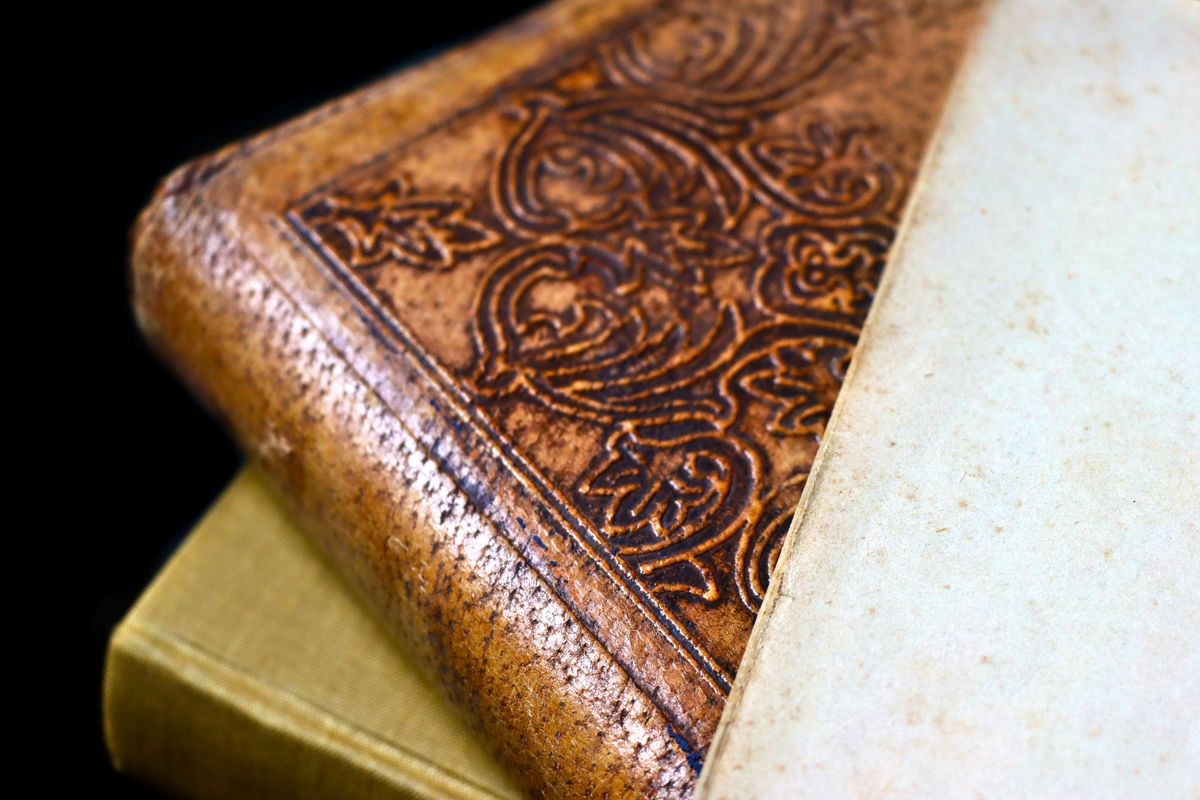
Half calf, and the economics behind it
Half calf is leather on the spine and corners, with paper or cloth over the rest of the boards. It exists because full leather was expensive and spines take the wear. A shelf of half calf was a library that wanted to look like a library from across the room, and from across the room it does.
At arm’s length the tell is the join: half calf has a visible edge where leather meets paper, usually about a fifth of the way across the board, and the corners are separate triangles. Full calf has no join at all. Three-quarter calf is the same construction with wider leather, and the terminology is used loosely enough that the measurement matters more than the label.
Telling the materials apart
| Material | How it looks | How it ages |
|---|---|---|
| Calf | Smooth, almost no grain, takes gilt crisply | Reddens and powders; hinges go first |
| Morocco (goat) | Pronounced grain, often cross-hatched | The most durable of the leathers |
| Sheep | Soft, loose grain, often split and pared thin | Scuffs and peels in layers |
| Vellum | Pale, hard, translucent at the edges | Cockles with humidity; can warp a board |
| Publisher’s cloth | Woven texture pressed with a grain pattern | Fades on the spine; corners bump |
| Buckram | Stiff, heavily sized cloth, often library rebinding | Extremely durable, rarely collectable |
Dating a book by its case
Publisher’s cloth begins in the 1820s and moves through recognisable fashions: plain ribbed cloth to the 1850s, blind stamping and elaborate gilt through the high Victorian period, then lighter designs and paper labels between the wars. The grain pattern pressed into the cloth is often the fastest date indicator on the shelf.
Old repairs
A rebacking — new leather on the spine with the original laid down over it — is honest work and usually improves a book’s life without destroying its value, provided the original spine is retained. What harms value: trimmed edges from an over-enthusiastic rebinding, replaced endpapers that take an inscription with them, and adhesive tape of any kind.
- Acceptable: rebacking with original spine laid down, corner repairs, resewing.
- Discloseable: new endpapers, replaced spine label, cleaned plates.
- Damaging: tape, trimmed edges, a text block washed to remove foxing, a nineteenth-century book in a twentieth-century binding with no record of what it replaced.
Signed bindings
A binder’s ticket or a stamp on the turn-in attributes the work to a workshop, not to a person. Firms employed dozens of finishers, and attribution to an individual hand is a claim that needs evidence beyond the ticket. Catalogue descriptions that name a person on the strength of a firm’s stamp are overstating what is known, and the honest form is “from the workshop of”.